
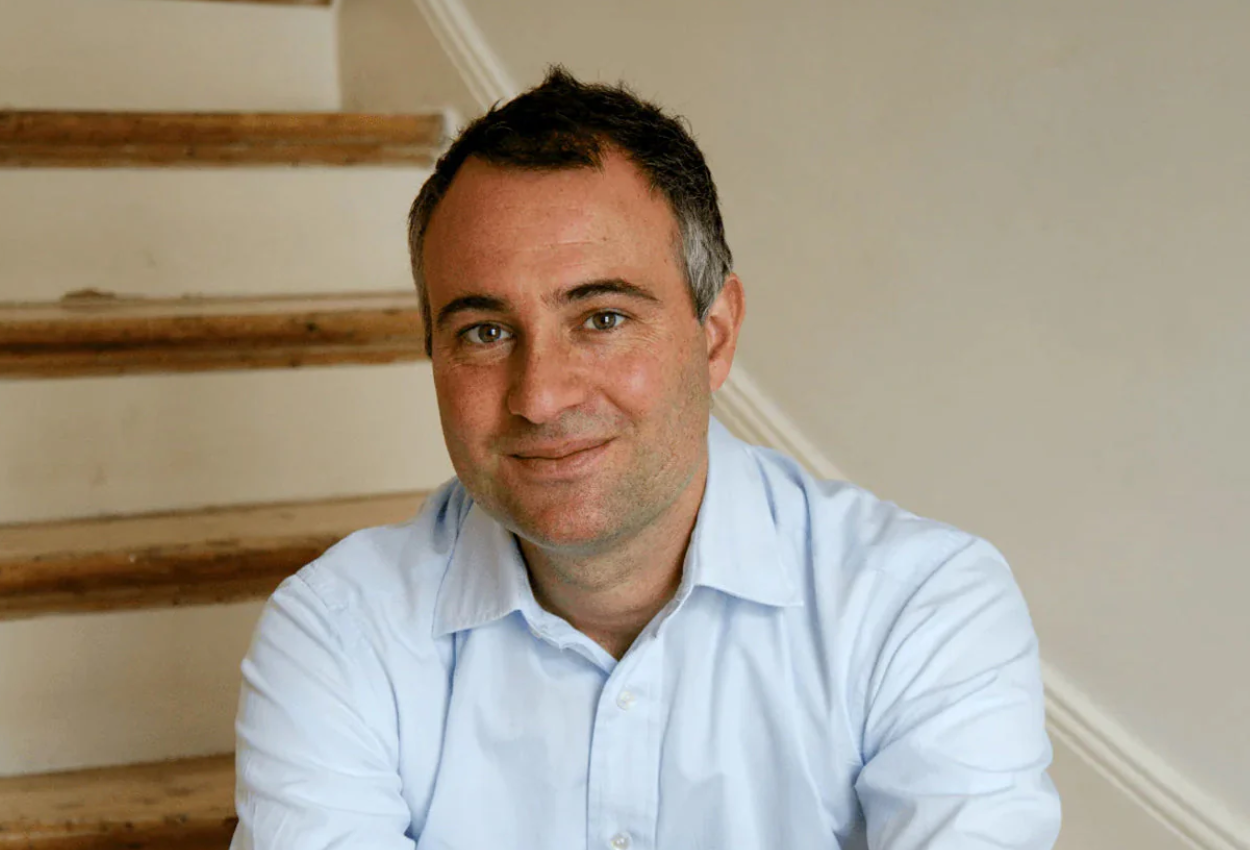
Ben Goldsmith is a British financier, environmentalist, and philanthropist whose public identity is built around one central idea: nature should not be treated as a decorative luxury, but as a foundation of human life, economic resilience, and cultural renewal. In Britain, where environmental debates often focus on carbon targets, energy policy, and climate regulation, Goldsmith has become especially associated with rewilding, nature restoration, and the belief that landscapes can recover when people give natural systems enough space and protection.
Born into the prominent Goldsmith family, Ben grew up close to wealth, politics, and public influence. His father, Sir James Goldsmith, was a well-known financier and political figure, while his family has long been connected to public life, business, and environmental causes. Yet Ben Goldsmith’s own career is not defined only by inheritance or family name. Over time, he has developed a distinct role at the intersection of finance, conservation, philanthropy, and public campaigning.
Goldsmith’s professional background is in investment. He is known for his involvement in green finance and for founding Menhaden, an investment company focused on energy and resource efficiency. This part of his career is important because it shows that his environmentalism is not simply sentimental. He approaches ecological issues through the lens of systems, capital, incentives, and long-term value. In his view, environmental damage is not only a moral problem; it is also a failure of economics and planning.
One of the themes running through Goldsmith’s work is the idea that markets and nature do not have to be enemies. While many environmentalists are skeptical of finance, Goldsmith has often argued that investment can be redirected toward cleaner technologies, efficient use of resources, and projects that reduce ecological harm. This does not mean that private capital alone can solve the climate and biodiversity crises, but it does suggest a practical approach: money should move away from destructive models and toward regeneration.
His strongest public association, however, is with rewilding. Rewilding is the process of restoring natural ecosystems by allowing wildlife, vegetation, rivers, wetlands, and landscapes to recover with less intensive human control. In Britain, this can mean bringing back native species, restoring river systems, reducing overgrazing, creating wildlife corridors, or allowing marginal farmland to become richer in biodiversity. Goldsmith has become one of the better-known advocates of this movement, arguing that the British countryside has been over-managed, depleted, and stripped of much of its natural abundance.
For Goldsmith, rewilding is not only about animals or scenery. It is about changing the emotional relationship between people and the land. He often speaks about the joy, wonder, and psychological value of living in a world where nature is visible, noisy, unpredictable, and alive. This emotional dimension is one reason why his environmentalism has reached audiences beyond technical policy circles. He does not present nature restoration only as a scientific duty, but as a source of beauty and meaning.
His philanthropic work also reflects this outlook. Goldsmith founded and chairs the Conservation Collective, a network of locally focused environmental foundations that support nature restoration and conservation projects in different parts of the world. The model emphasizes local knowledge and local action rather than a single centralized organization imposing one strategy everywhere. This approach fits with a broader trend in modern conservation: effective environmental protection often depends on communities that understand their own landscapes, pressures, and political realities.
Goldsmith’s public voice has sometimes been political, although not always in a conventional party-political sense. He has supported nature-friendly policies, criticized environmental destruction, and pushed for greater protection of rivers, seas, forests, and wildlife. He has also been connected to debates about how conservative politics can engage with nature protection. This is significant because environmentalism is often stereotyped as belonging only to the political left. Goldsmith’s work suggests a different tradition: a form of conservation rooted in stewardship, countryside protection, inheritance, and responsibility to future generations.
His views are not without controversy. Rewilding itself can be divisive, particularly among farmers, rural communities, and people who worry that conservation projects may ignore food production or local livelihoods. Some critics see rewilding as an elite project promoted by wealthy landowners. Goldsmith’s background can make him a target for that criticism. However, his supporters argue that the ecological crisis is so serious that Britain must be willing to rethink land use, farming incentives, and the relationship between productivity and biodiversity.
Another deeply personal part of Goldsmith’s public life is his writing and reflection on grief after the death of his daughter, Iris. His book “God Is an Octopus” explores loss, nature, family, and the search for meaning after tragedy. This work added another dimension to his public identity. It showed how his love of nature is not only political or ecological, but also spiritual and emotional. The natural world, in his writing, becomes a place of sorrow, healing, memory, and connection.
That personal tragedy gave his environmental voice a different quality. For many people, nature is not an abstract cause; it is where grief becomes bearable, where children learn wonder, where families gather, and where human life feels connected to something larger than itself. Goldsmith’s writing captures that sense of nature as refuge and teacher.
Ben Goldsmith’s importance lies in the way he brings together worlds that are often kept separate: finance and ecology, privilege and activism, grief and restoration, rural life and global environmental crisis. He is not a conventional environmental campaigner, and that is precisely why his role is distinctive. He speaks to audiences who may not respond to traditional activist language, but who may care deeply about rivers, birds, trees, soil, and the future of the countryside.
In an era of climate anxiety and biodiversity collapse, Goldsmith represents a hopeful strand of environmental thought. His message is not only that nature is being destroyed, but that nature can come back. Rivers can run cleaner, birds can return, forests can expand, and landscapes can become richer if people choose restoration over exhaustion. That optimism is one of the reasons his voice has become influential.
Ultimately, Ben Goldsmith’s legacy will depend not only on the companies he has founded or the campaigns he has supported, but on whether the idea of nature recovery becomes central to British public life. His career argues that environmentalism should not be limited to reducing harm. It should also be about abundance, renewal, and the possibility of a more living world.